
The Keto Diet: A Complete Guide to Understanding, Starting, and Thriving on Ketogenic Eating in 2026
The ketogenic (keto) diet has been one of the most talked-about ways of eating for the last decade, and for good reason. Originally developed in the 1920s as a therapeutic diet for epilepsy, it exploded into mainstream popularity around 2017–2019 and has refused to go away. Why? Because thousands of people (myself included at one point) have used it to lose stubborn fat, gain mental clarity, stabilize energy, and even reverse type 2 diabetes in some cases. But with all the hype also came a lot of confusion, bro-science, and clickbait articles. So let’s cut through the noise and give you an honest, up-to-date, human-written guide on what the keto diet actually is, how it works, who it’s for, and how to do it without losing your mind or your social life.
What Exactly Is the Keto Diet?
At its core, the ketogenic diet is a very low-carb, high-fat, moderate-protein way of eating that dramatically changes the way your body produces energy.
Normally, your body runs on glucose (sugar) that comes from carbohydrates. When you eat bread, rice, pasta, fruit, or even too many vegetables, your body breaks those carbs down into glucose, insulin shoots up, and glucose becomes the primary fuel.
On keto, you restrict carbohydrates so severely (usually to under 20–50 grams of net carbs per day) that after 2–4 days your liver starts converting stored fat into molecules called ketones. These ketones then become your body’s (and especially your brain’s) new primary fuel source. This metabolic state is called ketosis, and being “in ketosis” is the entire goal of the diet.
Standard macronutrient breakdown on keto:
• Fat: 65–80% of calories
• Protein: 15–30% of calories
• Carbohydrates: 5–10% of calories (often <30 g net carbs)
How Ketosis Actually Feels (The Real Experience)
When people ask me what being in ketosis feels like, I tell them it’s like upgrading from a noisy gasoline scooter to a silent electric car.
The first 3–7 days (sometimes called “keto flu”) can be rough: headaches, fatigue, brain fog, cravings, leg cramps. This happens because your body is switching fuel sources and your electrolytes (sodium, potassium, magnesium) drop dramatically.
But once you push through, and almost everyone does if they manage electrolytes properly, something magical happens around day 7–14:
• Energy becomes incredibly stable (no 3 p.m. crash)
• Hunger almost disappears (fat and ketones are highly satiating)
• Mental focus sharpens (many report it feels like “removing a blanket from your brain”)
• Sleep often improves
• Inflammation and joint pain can decrease
I’ve had clients in their 50s and 60s tell me it’s the first time in decades they woke up without aching.
Who Actually Benefits Most from Keto?
Keto isn’t for everyone, and that’s okay. It shines brightest for:
• People with insulin resistance or type 2 diabetes (dozens of studies show dramatic improvements in blood sugar and HbA1c)
• Those with stubborn body fat, especially around the abdomen
• Individuals with PCOS; it often restores menstrual cycles and fertility
• People with certain neurological conditions (epilepsy, Alzheimer’s, Parkinson’s, migraine; research is very promising)
• Endurance athletes who become “fat-adapted” (once past the initial adaptation, many report endless energy)
It’s less ideal for:
• High-intensity athletes who do explosive training (CrossFit, powerlifting, sprinting) because glucose is king for maximum power output
• People who psychologically can’t live without fruit, potatoes, or occasional pizza
• Those with certain rare metabolic disorders (always check with a doctor)
How to Start Keto Without Losing Your Mind
1. Calculate your macros
Use a calculator (like the one on ruled.me or carbmanager) to find your personal fat, protein, and carb grams. Rule of thumb for beginners: 20 g net carbs, 0.8–1.2 g protein per pound of lean body mass, and fill the rest with fat.
2. Clean out the kitchen
If it has more than 3–4 g net carbs per serving and isn’t a vegetable, it probably goes. Sorry, but having Oreos in the pantry is playing on expert mode.
3. Stock these staples
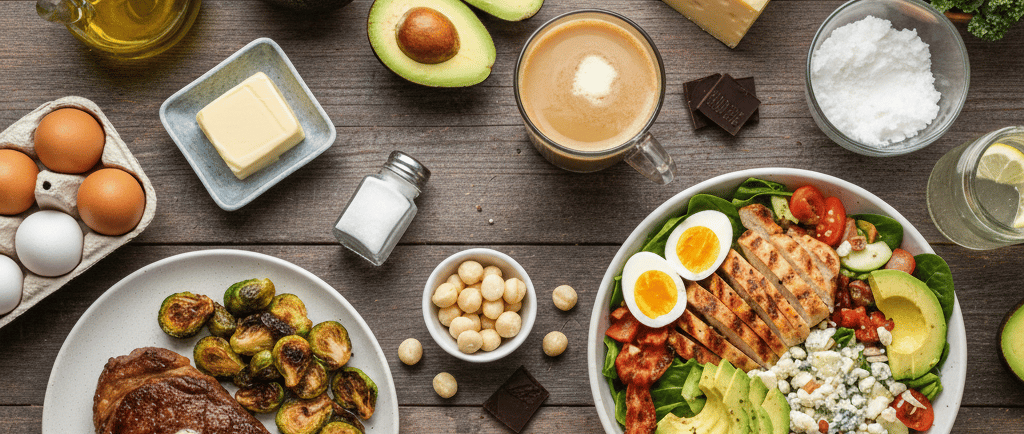
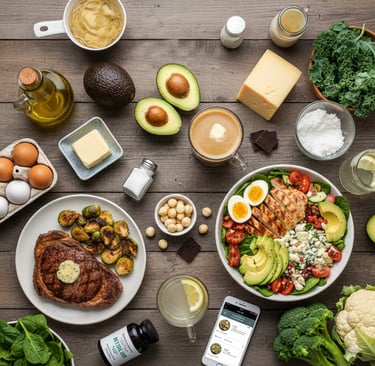
Eggs, avocados, olive oil, butter, ghee, coconut oil, fatty cuts of meat, salmon, sardines, broccoli, cauliflower, zucchini, spinach, kale, cheese, heavy cream, nuts (macadamia, pecans, almonds in moderation), pork rinds, electrolytes (LMNT, salted bone broth, or homemade “ketoade”).
4. Survive the keto flu
- Salt everything like you’re trying to melt ice on a driveway (5–7 g sodium/day)
- Take magnesium glycinate 300–400 mg at night
- Drink bone broth or add potassium salt (Nu-Salt Lite)
5. Track at first
Yes, it’s annoying, but weighing and logging food for the first 2–4 weeks teaches you portion sizes and hidden carbs (did you know onion and garlic have carbs?).
What a Typical Day Looks Like (2026 Edition)
Breakfast: 3-egg omelette with spinach, cheese, and half an avocado + bulletproof coffee (coffee blended with 1 tbsp butter + 1 tbsp MCT oil)
Lunch: Cobb salad with grilled chicken, bacon, hard-boiled egg, avocado, blue cheese, olive oil dressing
Dinner: Ribeye steak with garlic butter, side of roasted Brussels sprouts cooked in bacon fat
Snack (if needed): Handful of macadamia nuts or a square of 90% dark chocolate
Total: ~20 g net carbs, 150 g fat, 100 g protein (for a 180 lb male; adjust accordingly).
Common Mistakes That Derail 90% of People
• Eating too much protein (excess protein can convert to glucose via gluconeogenesis)
• Not eating enough fat (you’re not on a “low-calorie” diet anymore; fat is your fuel)
• Hidden carbs in sauces, seasonings, “low-carb” packaged foods (always read labels)
• Drinking alcohol (most forms kick you out of ketosis; dry wine or spirits + zero-carb mixer are safest)
• Ignoring electrolytes (this is the #1 reason people quit)
Long-Term Keto: Can You Do It Forever?
Some people (like me) have stayed keto or cyclical keto for 5–10+ years with perfect bloodwork. Others use it as a 3–12 month tool to reset metabolism and then transition to a sustainable low-carb lifestyle (50–100 g carbs).
Both approaches work. The most important thing is finding what makes you feel and perform best without feeling deprived.
The 2026 Keto Landscape
Today, keto is easier than ever:
• Grocery stores have entire keto sections
• Restaurants offer lettuce-wrapped burgers and cauliflower crust pizza
• Companies like Keto Chow, Perfect Keto, and Real Good Foods make convenience foods that actually taste good
• Continuous glucose monitors (CGMs) let you see exactly how your body responds to different foods
Final Thoughts
The ketogenic diet isn’t a miracle. It’s a metabolic hack that works extraordinarily well for the right person at the right time. It’s not about demonizing carbs forever; it’s about giving your body an alternative fuel source and discovering how good you can actually feel when insulin levels stay low and inflammation drops.
If you’re curious, give it a strict 30 days. Track everything, manage electrolytes, and see how you feel. Worst case, you learn something about your body. Best case, you unlock a level of energy, focus, and body composition you didn’t know was possible.
Either way, you’ll never look at a bagel the same way again.